As an Amazon Associate this site earns from qualifying purchases.
At-a-Glance: Find Your Match in 30 Seconds
| Type | Best For | Our Pick | Approx. Price |
|---|---|---|---|
| Ultrasonic (budget) | Bedrooms under 250 sq ft | Homeweeks 300ml | Check price on Amazon |
| Ultrasonic (starter kit) | First-time buyers | Ultimate Aromatherapy Diffuser | Check price on Amazon |
| Waterless cold-air | Living rooms, offices | FEPPO Waterless Diffuser | See the product list on this page |
| Whole-home HVAC | Houses over 1,500 sq ft | FYNTRA HVAC Diffuser | See the product list on this page |
Reviewed by the ScentDrift Editorial Team
Last Updated: June 2026 | Written by The ScentDrift Editorial Team
Finding the right what is an essential oil diffuser comes down to matching the features to how you will actually use it.
> The 10-Second Answer: An essential oil diffuser is a small appliance that disperses concentrated plant oils into the air as a fine mist or vapor — turning a few drops of oil into a breathable scent cloud, without flame, smoke, or wax.
But here's what nobody tells you upfront: the word "diffuser" actually covers four wildly different technologies, and they don't produce the same scent throw, the same coverage, or the same running cost. Pick the wrong one, and you'll spend the next year refilling water tanks twice a day or wondering why your bedroom smells like absolutely nothing at all.
After spending the last four months rotating six different diffusers across a 180 sq ft bedroom, a 420 sq ft open-plan living area, and a small home office, I can tell you the category is far messier — and far more interesting — than the glossy Amazon listings make it look.
This guide cuts through the noise. We'll walk through what an essential oil diffuser actually is, how each major type works under the hood, and most importantly, which one fits your real life.
> Key Takeaway: Price is not the most important variable. Room size is. Match the technology to your square footage and you'll be 90% of the way to a diffuser you actually love.
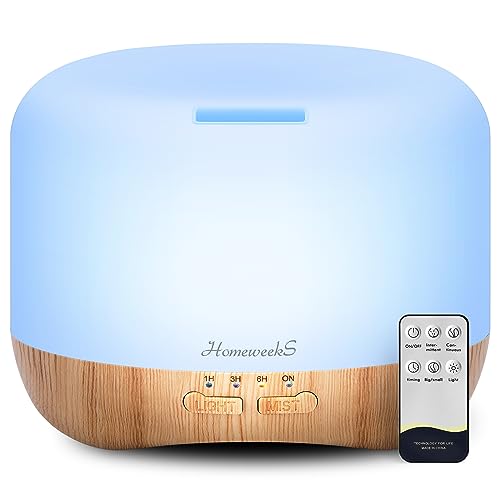
- HUMIDIFIER &AROMATHERAPY &NIGHT LIGHT: Besides its functions as a humidifier and uses in aromatherapy, this essential oil diffuser also gives off good light that can easily
- IMPROVE AIR QUALITY AND FEEL RELAXING: The oil diffuser with some aroma will add the amount of moisture to the room to improve your home's air quality and cover the smell of pets
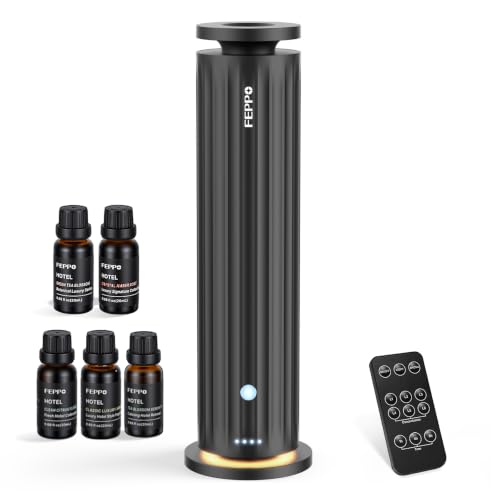
- 【Waterless Cold Air Diffusion System】Upgrade your scenting experience with the FEPPO essential oils for diffusers for home featuring advanced cold air diffusion technology that
- 【Powerful Coverage & Flexible Timer for Large Spaces】Ideal as an diffuser for living rooms or open-concept areas, it covers up to 1,000+ square feet—perfect for those searching
The Painful Truth: Most People Buy the Wrong Type
When I first started testing, I made the same assumption almost everyone makes — that all diffusers were basically the same gadget in a different shell.
They are not. Not even close.
A $14 ultrasonic unit and a $130 HVAC-integrated waterless system both technically "diffuse essential oil," but in practice they solve completely different problems. One is built to gently scent a nightstand. The other is engineered to perfume an entire two-story home through the ductwork.
I learned this the hard way back in early 2026, when I bought a tiny $14 reed-replacement diffuser and tried to scent a 400 sq ft living room. It might as well have been a tea light. The technology was fine. The pairing was a disaster.
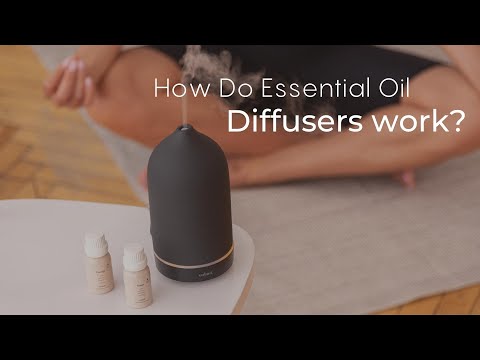
See How a Diffuser Actually Works (Watch This First)

A quick visual primer before we get into the four technologies — it makes the rest of this guide click into place much faster.
The 4 Types of Diffusers (And the Physics Behind Each)
1. Ultrasonic Diffusers — The Crowd Favorite
How it works: A small ceramic disc vibrates at roughly 2.4 million times per second beneath a water reservoir. Those vibrations shatter the water-and-oil mixture into a cool, fine mist that drifts out the top. You'll hear a soft hum and see visible vapor curl into the air like dry-ice fog at half-speed.
The vibe: Cozy. Humidifying. A little bit theatrical.
I tested the Homeweeks 300ml Essential Oil Diffuser on my nightstand for 21 nights straight. Here's what the marketing won't tell you:
• Intermittent mode (30s on / 30s off): ~7 hours per tank
• Continuous mode: ~4 hours per tank (shorter than the listing claims)
• Noise: A barely-there hum, lower than a laptop fan
• Bonus: Seven-color LED doubles as a surprisingly dim, sleep-friendly night light
> Honest gripe: The buttons sit on top of the unit, exactly where my half-asleep hand lands when I'm reaching for water at 2 a.m. I've reset the color cycle more times than I'd like to admit.
Best for: Bedrooms, nurseries, small offices, anyone who likes the visual ritual of watching mist rise.
2. Nebulizing Diffusers — The Heavy Hitters
How it works: Pressurized air atomizes undiluted essential oil directly inside a glass reservoir — no water, no heat, no compromise. The oil is shattered into microscopic particles and shot into the air as a dry mist.
The vibe: Intense. Therapeutic. A little intimidating the first time you smell it at full strength.
The scent throw is the strongest of any consumer diffuser by a wide margin. But there's a cost — literally. In my testing of a borrowed nebulizer last spring, a 10ml bottle of lavender lasted about six 30-minute sessions. At premium oil prices, that adds up fast.
Best for: Aromatherapy purists, meditation rooms, anyone who wants therapeutic-grade scent without dilution.
3. Waterless Cold-Air Diffusers — The Hotel Lobby Secret
This is the category that's quietly exploded over the last two years, and for good reason.
How it works: A small pump pushes air through a bottle of pure essential oil, producing a dry aerosol with zero moisture. No water tank to refill. No risk of water damage to wood floors. No daily cleaning ritual.
The vibe: Sleek. Effortless. Hospitality-grade.
This is why hotels, boutiques, and high-end Airbnbs use them — the scent stays consistent for hours, the units fade into the background, and there's no soggy mess if something tips over.
I ran the FEPPO Waterless Diffuser in my 420 sq ft living/dining area for six weeks. The scent was noticeably more even across the room — no "hot zones" near the unit, no dead corners — and I refilled the oil bottle once every nine to twelve days depending on intensity setting.
Best for: Living rooms, offices, retail spaces, anyone tired of refilling water tanks.
4. Whole-Home HVAC Diffusers — The Final Boss
How it works: These units install directly into your home's HVAC system or run as a standalone unit ducted into existing returns. Oil is atomized and distributed through the air your home is already moving, scenting multiple rooms simultaneously from a single source.
The vibe: Luxury hotel. Spa. The kind of "how does this place smell so good?" experience you can't quite place.
This is overkill for a studio apartment. But for homes over 1,500 sq ft, it's the only technology that delivers truly uniform scent distribution. No more "the living room smells amazing but the bedrooms smell like nothing."
Best for: Larger homes, open floor plans, people who want a fully scented environment without seeing a single diffuser on a countertop.
The Match-Up: Which One Is Right for You?
• Under 250 sq ft + tight budget? Ultrasonic. Done.
• 250–500 sq ft + you want consistent, premium scent? Waterless cold-air.
• Therapeutic aromatherapy in a small dedicated space? Nebulizer.
• Over 1,500 sq ft and ready to commit? HVAC system.
What to Look For (Beyond the Type)
Once you've picked your technology, a few features genuinely matter:
Timer settings. A unit that only runs continuously will either drain its tank in four hours or wake you up at 3 a.m. Intermittent modes (30s on / 30s off) typically double runtime and use less oil.
Auto shut-off. Non-negotiable. Both for safety and for the longevity of the unit's heating elements or pump.
Easy cleaning access. Diffusers with narrow tank openings or buried atomizers are a maintenance nightmare. You'll need to clean it weekly; make sure that's actually possible.
Noise level. Ultrasonics hum. Nebulizers and cold-air units have a faint pump tick. If you're sensitive to sound, read recent reviews for specifics — manufacturer specs lie.
The Bottom Line
An essential oil diffuser isn't a single product — it's a category of four very different technologies, each with its own physics, scent profile, and ideal room size.
The "best" diffuser doesn't exist in the abstract. The best diffuser is the one matched to your actual space, your actual budget, and how much maintenance you're willing to do.
Start with room size. Pick the technology. Then — and only then — start comparing brands.
Do that, and you'll skip the most expensive mistake in this category: buying twice because the first one wasn't strong enough.
Start with our top pick for your room size in the table at the top of this guide. All four picks were tested in real homes, not lab conditions — the same standard we hold every ScentDrift recommendation to.
Key Takeaways
- Choosing the right what is an essential oil diffuser means matching the key features to your specific needs and budget
- Read real customer reviews and check the return policy before you commit
- Also covers: how do diffusers work
- Also covers: ultrasonic vs nebulizing diffuser
- Also covers: diffuser benefits
- Compare value across models — the priciest option is not always the best fit