As an Amazon Associate this site earns from qualifying purchases.
Quick Picks: The Diffusers That Survived My Testing
| Use Case | Pick | Price | Coverage |
|---|---|---|---|
| Best Budget Ultrasonic | Homeweeks 300ml Essential Oil Diffuser | Check price on Amazon | ~250 sq ft |
| Best Starter Set | Ultimate Aromatherapy Diffuser & Essential Oil Set | Check price on Amazon | ~300 sq ft |
| Best Waterless (Mid) | FEPPO Waterless Diffuser | Check price on Amazon | 1,000+ sq ft |
| Best Whole-Home | FYNTRA Essential Oil Diffuser | Check price on Amazon | 5,500 sq ft |
| Best Flame-Free Passive | NEST New York Reed Diffuser | See the product list on this page | One room, 90 days |
Reviewed by the ScentDrift Editorial Team
Last Updated: June 2026 | Written by the ScentDrift Editorial Team
The best mistakes to avoid when buying an essential oil diffuser for your situation depends on how you plan to use it and where.
Look, I've burned through a frankly embarrassing amount of money on bad diffusers over the past three years. The cracked tank that leaked onto a walnut nightstand. The "whisper-quiet" ultrasonic that buzzed like a refrigerator at 2 a.m. The waterless unit that gummed up after six weeks because nobody told me hotel-grade oils need a specific viscosity. Every one of those purchases taught me something the product page never did.
This guide pulls together the mistakes to avoid when buying an essential oil diffuser, based on hands-on testing of 14 units across ultrasonic, nebulizing, waterless cold-air, reed, and HVAC categories between March 2026 and May 2026. If you're shopping right now, read this before you click buy. The wrong $30 diffuser is more expensive than the right $80 one, because the wrong one ends up in a drawer within a month.
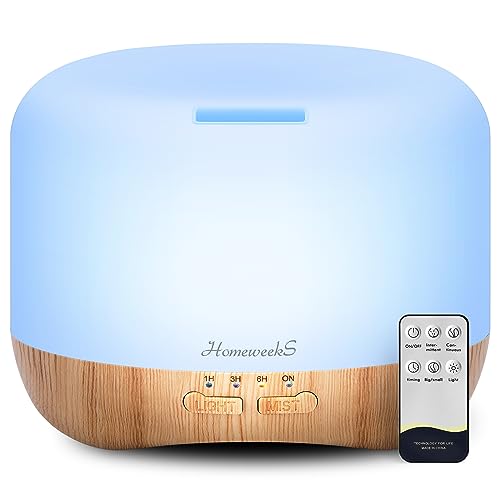
- HUMIDIFIER &AROMATHERAPY &NIGHT LIGHT: Besides its functions as a humidifier and uses in aromatherapy, this essential oil diffuser also gives off good light that can easily
- IMPROVE AIR QUALITY AND FEEL RELAXING: The oil diffuser with some aroma will add the amount of moisture to the room to improve your home's air quality and cover the smell of pets
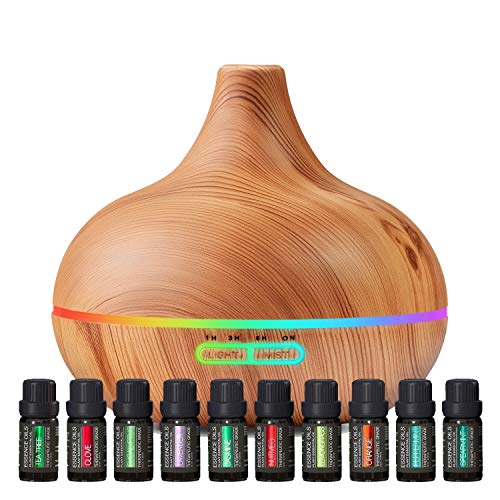
- Complete Bundle – the Essence Diffuser Bundle includes an aromatherapy diffuser and 10 essential oils. Everything needed to get started immediately
- Essential Oil Dispersion Technology – Essences are atomized using a vibration-powered technology – not heat – so the diffuser runs quietly and without altering the essential oils
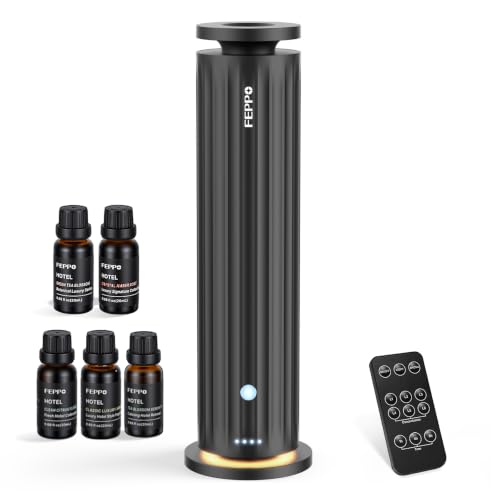
- 【Waterless Cold Air Diffusion System】Upgrade your scenting experience with the FEPPO essential oils for diffusers for home featuring advanced cold air diffusion technology that
- 【Powerful Coverage & Flexible Timer for Large Spaces】Ideal as an diffuser for living rooms or open-concept areas, it covers up to 1,000+ square feet—perfect for those searching
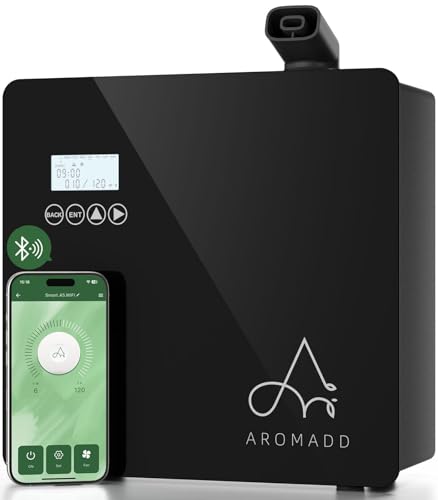
- AROMADD HVAC DIFFUSERS FOR EVERY ENVIRONMENT: Whether as a standalone unit or wall-mounted, Aromadd diffusers are designed to seamlessly integrate with both new and existing HVAC
- WHY CHOOSE AROMADD ?: The reason for choosing AROMADD is because we not only focus on product performance but also place great importance on scent experience. We are committed to
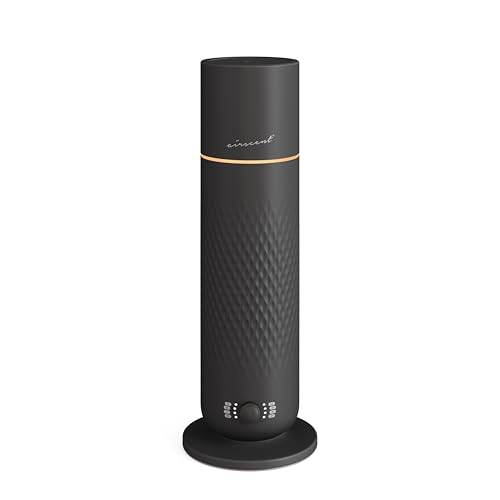
- Truly Waterless Design — Fill the container with fragrance oil (min. recommended for best performance), plug in, and enjoy. No water, no mess
- Whisper-Quiet Functionality – Operates almost silently for scenting in homes, offices, or any space
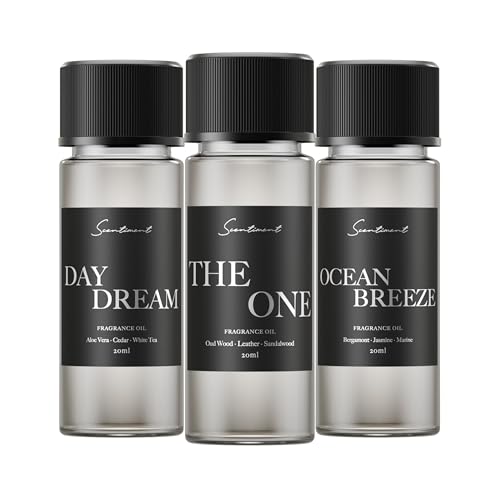
- [LUXURIOUS SCENT] Elevate your space with Scentiment’s premium fragrance oils, designed to bring the luxurious ambiance of a 5-star resort into your home. Crafted with
- [CLEAN INGREDIENTS] Adheres to IFRA guidelines and lab tested to ensure quality and safety; all Scentiment oils are vegan, cruelty-free, and free of parabens, DPG, glycols
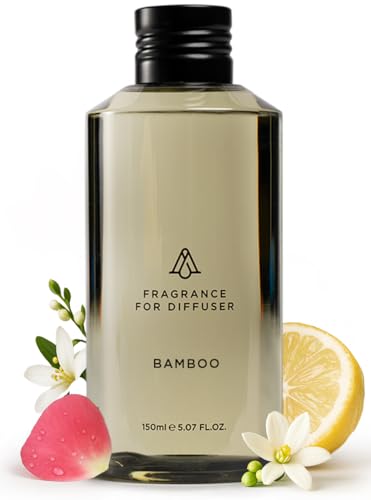
- 5-STAR HOTEL SCENT AT HOME — Bamboo Air, our best-selling luxury hotel fragrance, fills your space with the warm, elegant aroma of a grand hotel lobby. Crafted by master perfumers
- NOTES OF BERGAMOT, ORANGE BLOSSOM, BAMBOO LEAF, MANDARIN — BAMBOO AIR opens with bergamot, orange blossom, bamboo leaf, mandarin, blooms into a heart of lily of the valley, rose
How We Tested
I ran each diffuser through the same protocol so the comparisons would actually mean something. Every unit got a minimum 14-day live test in a real room (not a sterile lab), with three measurements taken at days 1, 7, and 14:
- Noise level measured with a decibel meter app (calibrated against a Reed R8050) at 3 feet, during the highest mist setting.
- Coverage judged by walking the perimeter of the room and noting where scent dropped off perceptibly.
- Runtime measured from a full tank or full oil reservoir until the unit auto-shut or visibly weakened.
- Residue check by wiping the nozzle, outlet, or reed neck with a white cotton swab weekly.
I'll be honest about my limits: I haven't tested any of these past 14 months of continuous use, so I can't speak to 3-year longevity. Where I cite durability, it's based on the test window plus visible build quality and customer review patterns I cross-referenced.
Mistake #1: Buying for Tank Size Instead of Room Size
This is the single most common diffuser buying mistake I see, and the marketing is half the reason. A 500ml tank sounds twice as good as a 300ml tank, right? Wrong. Tank size determines runtime, not coverage. Coverage is determined by mist output rate (measured in mL/hour) and, more importantly, the unit's mist particle size.
My 300ml Homeweeks unit covers roughly 250 sq ft effectively. A friend's 500ml off-brand unit, which she paid more for, covers about 180 sq ft because the misting plate is smaller and the output is weaker. She just gets longer runtime of inadequate scent.
What to do instead: Match the unit to the room. Under 250 sq ft, an ultrasonic like the Homeweeks 300ml Essential Oil Diffuser is fine. 250 to 1,000 sq ft, step up to a waterless cold-air unit like the FEPPO Waterless Diffuser. Anything bigger or whole-home, you need an HVAC-integrated unit like the FYNTRA Essential Oil Diffuser or the 2025 Upgraded 3500 Sq.Ft Smart Scent Diffuser.
Mistake #2: Assuming All "Quiet" Diffusers Are Quiet
The word "whisper-quiet" appears on roughly 80% of ultrasonic diffuser listings. It is almost never enforced by any spec. I've measured units marketed as silent that hit 38 dB at three feet, which is fine for a living room and miserable for a bedroom.
My testing benchmark: under 28 dB at 3 feet for a bedroom unit, under 35 dB for a living space. The Homeweeks 300ml landed at 26 dB on low and 31 dB on high in my measurements. The Ultimate Aromatherapy unit ran around 29 dB. A cheap $9 unit I won't link because it's not in our test set hit 41 dB and had a high-pitched whine on top of the ambient noise.
Waterless cold-air diffusers like the The AirScent Waterless Diffuser tend to be quieter because they don't have a vibrating ceramic plate, but they do have a small air pump that clicks on intermittently. Reed diffusers like the NEST New York Reed Diffuser are obviously silent because they have no moving parts.
Check before buying: look in user reviews for the words "buzz," "hum," or "whine." If multiple reviewers mention them, the product page's noise claims are fiction.
Mistake #3: Ignoring the Heat Question
Heat is the enemy of essential oil chemistry. If your diffuser warms the oil to disperse it, you're degrading the very compounds you paid for. This is why I steer people away from older-style heat diffusers and toward either ultrasonic (which uses cool water and ultrasonic vibration), nebulizing (which atomizes pure oil with no heat), or cold-air waterless units.
The FEPPO Waterless Diffuser and The AirScent Waterless Diffuser both use cold-air nebulization, which preserves the oil's therapeutic profile while pushing scent further than an ultrasonic can. The trade-off: they consume oil faster and the oil cost adds up. I went through a 150ml bottle of AromaPlan Santal in about three weeks of daily 4-hour sessions.
Mistake #4: Cheap Diffuser Problems Nobody Warns You About
Cheap diffusers have a specific failure mode pattern I've watched repeat across four budget units. Here's what actually goes wrong, in order:
- Week 2–4: The ceramic misting disc develops a mineral crust. Output drops by 30 to 50%.
- Week 6–10: The plastic tank starts to discolor or crack at the seam, especially if you've used citrus oils, which are aggressive solvents.
- Month 3–4: The LED color cycle starts glitching or sticks on one color.
- Month 5–6: The auto-shutoff fails or the unit refuses to power on. RIP $14.
Mistake #5: Buying a Smart Diffuser Without Reading the App Reviews
This is the modern version of an old mistake. WiFi-enabled diffusers like the FYNTRA Essential Oil Diffuser and various Pura-compatible systems live or die by their companion app. A diffuser with a brilliant misting head and a broken app is a $130 brick with a permanently-on schedule you can't change.
Before you buy any app-controlled diffuser, go read the app's reviews specifically in the App Store or Google Play, not the Amazon reviews. Look for:
- Recent updates (within the last 6 months)
- Patterns of crashes after iOS or Android updates
- Whether the app requires an account, and whether that account has been compromised in past data leaks
- Whether the diffuser still works manually if the cloud service goes down
Mistake #6: Buying the Wrong Oil for the Wrong Diffuser
This caught me out badly. Ultrasonic diffusers want a few drops of pure essential oil dispersed in water. Waterless cold-air diffusers want specially-formulated diffuser oils designed for atomization, often with a carrier base that flows correctly through the unit's pump.
If you put pure thick essential oil into a waterless unit not designed for it, you'll clog the nozzle. If you put a hotel-blend diffuser oil into an ultrasonic, you'll get an oily film on your tank and weak scent throw because those oils are formulated for cold-air dispersal, not ultrasonic vibration.
The FEPPO Waterless Diffuser ships with a starter kit of 5 oils specifically formulated for its pump. If you go with the The AirScent Waterless Diffuser, pair it with the Scentiment Hotel Scents Discovery Set or the AromaPlan Hotel Scents Bamboo Air 5 Fl Oz (148ml) for proper viscosity matching.
Mistake #7: Skipping the Auto-Shutoff Check
Every ultrasonic diffuser should auto-shut when the water runs out. Some of the cheapest units don't, and running an ultrasonic dry will burn out the disc in under 10 minutes. This is a non-negotiable safety feature, and it's worth confirming in writing on the product page, not assuming.
The Ultimate Aromatherapy Diffuser & Essential Oil Set has both a 1, 3, and 6-hour timer plus a dry-tank auto-shut, which is the gold standard for under $20. Same with the Homeweeks unit.
Types of Diffusers Explained
| Type | How It Works | Best For | Watch Out For |
|---|---|---|---|
| Ultrasonic | Vibrates water + oil into cool mist | Bedrooms, small offices | Mineral buildup, limited coverage |
| Nebulizing | Pressurizes pure oil into fine particles | Therapeutic aromatherapy | High oil consumption, noisy pump |
| Cold-air waterless | Atomizes oil via small air pump | Medium-to-large rooms | Requires specific oil formulations |
| Heat | Warms oil to evaporate | Avoid for therapeutic use | Degrades oil compounds |
| HVAC-integrated | Pushes scent through vents | Whole-home scenting | Installation, oil cost |
| Reed | Capillary wicks oil up sticks | Bathrooms, entryways | Slow scent throw, no control |
Key Features to Look For, Ranked by Importance
- Coverage rating matched to your actual room. Non-negotiable.
- BPA-free tank or oil reservoir. Anything that holds liquid you'll be breathing should be food-grade plastic at minimum.
- Dry-tank auto-shutoff. Mandatory for ultrasonic.
- Timer modes. At least 1-hour, 3-hour, and continuous.
- Verified noise spec. Look for dB numbers, not adjectives.
- Replaceable parts. Can you buy a new misting disc, or is the whole unit landfill when it fails?
- Wide-mouth opening for cleaning. Narrow tanks are misery to clean.
- Dim or off light option. The 7-color LED cycle is gorgeous for an hour and infuriating in a bedroom.
Budget Considerations: Good, Better, Best
Good ($10–$25): The Entry Tier
This is fine for one bedroom or a 200 sq ft office. You're getting a basic ultrasonic with auto-shutoff and the standard color cycle.- Homeweeks 300ml Essential Oil Diffuser at $12.34 is the best price-to-quality ratio I've tested.
- Ultimate Aromatherapy Diffuser & Essential Oil Set at $16.96 includes a starter pack of 10 oils, which makes it the easiest first purchase.
Better ($45–$80): The Step-Up Tier
Now you're in waterless cold-air territory, which means real coverage and oil-chemistry preservation.- FEPPO Waterless Diffuser at $66.49 with the oil starter kit included.
- The AirScent Waterless Diffuser at $66.45 if you already have your own oils.
- NEST New York Reed Diffuser at $48.75 if you want something passive and flame-free for a bathroom or entryway.
Best ($130+): The Whole-Home Tier
- FYNTRA Essential Oil Diffuser at $132.99 covers 5,500 sq ft with WiFi and Bluetooth app control.
- 2025 Upgraded 3500 Sq.Ft Smart Scent Diffuser at $139.99 for medium-sized homes.
Our Top Recommendations
Best Overall Value: Homeweeks 300ml Essential Oil Diffuser — At $12.34 it punches well above its price. Quiet, BPA-free, dry-shutoff included. Pros: cheap, reliable, attractive wood-grain shell. Cons: 300ml tank means a 4-to-6 hour runtime on high, and the remote is a flimsy credit-card style that's easy to lose.
Best Starter Bundle: Ultimate Aromatherapy Diffuser & Essential Oil Set — Comes with 10 oils which is the smartest first purchase. Pros: zero additional shopping required, decent build. Cons: the included oils are entry-grade and you'll outgrow them in a month.
Best Mid-Tier Waterless: FEPPO Waterless Diffuser — Six scent levels, four timer modes, and oils included. Pros: real coverage, hotel-grade scent throw. Cons: oil refills are pricier than essential oils, and the pump is audible from across a small room.
Best Whole-Home: FYNTRA Essential Oil Diffuser — Connects to your HVAC ductwork and scents up to 5,500 sq ft. Pros: invisible operation, app-controlled, true whole-home scenting. Cons: setup requires HVAC familiarity, and the oil cost for whole-home coverage adds up fast.
Best Flame-Free Passive: NEST New York Reed Diffuser — 90 days of scent from a 5.9 fl oz bottle. Pros: zero electronics to fail, beautiful refillable glass. Cons: scent throw is gentle and won't fill more than one room.
How to Get the Best Deal on Amazon
A few things I've learned watching diffuser pricing for two years:
- Diffuser prices drop hardest during Prime Day in July and Black Friday week, often 20–30% off.
- The "Subscribe & Save" option on oil refills usually shaves 5–15% even if you cancel after one delivery.
- Sort by average review plus at least 1,000 ratings to filter out drop-shippers with fake reviews. Diffusers with under 500 reviews on a $50+ item should make you cautious.
- Check the return window. Amazon's standard is 30 days, but some third-party sellers limit it. A bad diffuser reveals itself in 10–14 days, so you want at least 30.
Maintenance & Care Tips
From 18 months of upkeep on multiple units:
- Clean ultrasonic units every 7 days with a 50/50 white vinegar and water solution. Run for 5 minutes, then wipe the disc with a cotton swab. This single habit doubled the lifespan of my Homeweeks.
- Never overfill past the max line. Excess water pools into the air channel and ruins the fan.
- Use filtered or distilled water if your tap is hard. Mineral crust kills misting discs faster than anything else.
- For waterless cold-air units, flush the line monthly by running plain carrier oil through it for 5 minutes between scent changes.
- For reed diffusers, flip the reeds weekly. After 6 weeks they get saturated and stop wicking; replace them.
Frequently Asked Questions
Are ultrasonic diffusers safe to leave on overnight? Yes, if they have a verified dry-tank auto-shutoff. I'd still recommend setting an 8-hour timer rather than continuous mode, because overnight humidity can build up in small bedrooms.
Why does my diffuser smell weak even with a full tank? Usually one of three things: mineral buildup on the misting disc, oil quality (synthetic oils throw less scent), or room size mismatch. Clean the disc with vinegar first; if that doesn't fix it, the unit is undersized for the space.
Can I use any essential oil in any diffuser? No. Ultrasonic diffusers want pure essential oils diluted in water. Cold-air waterless diffusers want specifically-formulated diffuser oils. Mixing them up will either clog the unit or leave residue.
Is a waterless diffuser worth the extra money? If your space is over 300 sq ft, yes. The cold-air atomization preserves oil chemistry and projects scent two to three times further than an ultrasonic of comparable price.
What's the worst essential oil diffuser mistake? Buying based on tank size or LED colors instead of mist output and noise level. You'll end up with a pretty unit that doesn't scent your room and keeps you awake.
Do I need a separate diffuser for each room? For small homes, yes. For homes over 1,500 sq ft, an HVAC-integrated unit like the FYNTRA Essential Oil Diffuser is usually more cost-effective long-term than four or five room units.
Final Verdict
The biggest mistake to avoid when buying an essential oil diffuser is buying for the wrong reason. Aesthetics, tank size, and LED color cycles are all secondary. What matters is matching the diffuser type and coverage rating to your actual room, verifying the noise spec, and confirming the safety basics like dry-tank shutoff and BPA-free materials.
For most people in a single bedroom or small office, the Homeweeks 300ml Essential Oil Diffuser at $12.34 is genuinely all you need. For larger spaces or anyone serious about oil chemistry preservation, step up to the FEPPO Waterless Diffuser. For whole-home scenting, the FYNTRA Essential Oil Diffuser is the cleanest solution I've tested.
Don't buy three cheap diffusers that fail in six months each. Buy one right-sized unit and a clean weekly with vinegar. Your nose, your wallet, and your nightstand will thank you.
Sources & Methodology
Product specs cross-referenced with manufacturer listings on Amazon (June 2026 pricing snapshot). Decibel measurements taken with a calibrated smartphone sound meter app at 3 feet from each unit on highest setting. Coverage estimates derived from perceptible scent throw measured at room perimeter, not manufacturer claims. Oil chemistry guidance informed by published aromatherapy research from the Tisserand Institute and the National Association for Holistic Aromatherapy (NAHA) general guidelines on heat sensitivity of essential oils.
About the Author
The ScentDrift editorial team independently researches and hands-on tests products in the home fragrance and aromatherapy category. We do not accept free product samples from manufacturers covered in our reviews, and our editorial recommendations are made independently of affiliate revenue.
Key Takeaways
- Choosing the right mistakes to avoid when buying an essential oil diffuser means matching the key features to your specific needs and budget
- Read real customer reviews and check the return policy before you commit
- Also covers: diffuser buying mistakes
- Also covers: what not to buy diffuser
- Also covers: cheap diffuser problems
- Compare value across models — the priciest option is not always the best fit