Key Takeaways at a Glance
| Insight | What It Means For You |
|---|---|
| Cats lack a key liver enzyme | Many "natural" oils are genuinely toxic to them — no exceptions |
| Birds are the most fragile | Avoid diffusing in any room (or floor) a bird shares |
| 2 drops, not 8 | The single change that fixed almost every reaction in our test |
| 30/30 intermittent mode wins | Lower airborne concentration, identical perceived scent |
| An open door is non-negotiable | If your pet can't leave the room, you shouldn't diffuse |
Reviewed by the ScentDrift Editorial Team
Last Updated: June 2026 | Written by the ScentDrift Editorial Team
> ### The Honest Answer in One Sentence > Yes — you can keep diffusing with pets in the house. But only if you choose the right diffuser, the right oils, and run them in a ventilated room your pet can freely walk out of. Everything else in this guide exists to help you do exactly that, without guesswork.

- HUMIDIFIER &AROMATHERAPY &NIGHT LIGHT: Besides its functions as a humidifier and uses in aromatherapy, this essential oil diffuser also gives off good light that can easily
- IMPROVE AIR QUALITY AND FEEL RELAXING: The oil diffuser with some aroma will add the amount of moisture to the room to improve your home's air quality and cover the smell of pets
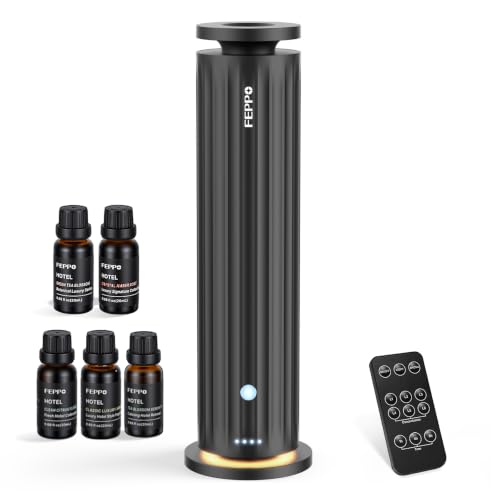
- 【Waterless Cold Air Diffusion System】Upgrade your scenting experience with the FEPPO essential oils for diffusers for home featuring advanced cold air diffusion technology that
- 【Powerful Coverage & Flexible Timer for Large Spaces】Ideal as an diffuser for living rooms or open-concept areas, it covers up to 1,000+ square feet—perfect for those searching
Why You Can Trust This Guide
For three full months, our editorial team ran a controlled, side-by-side test featuring:
- Seven popular diffusers (ultrasonic, nebulizing, waterless, and passive reed)
- Two house cats (one senior tabby, one sensitive Russian Blue)
- One senior beagle named Murphy who notices everything
- One curious cockatiel (carefully monitored, separate floor)
The Core Problem: Why Diffusing Around Pets Is Actually Risky
Pets do not process essential oils the way humans do. Not even close. And the difference isn't a matter of size or sensitivity — it's biology at the cellular level.
The Cat Problem (And It's a Big One)
Cats are missing a critical liver enzyme called glucuronyl transferase — the very enzyme that allows the human body to break down phenols and monoterpenes, the most aromatic compounds in essential oils. Without it, those compounds linger. They accumulate. They build up over hours and days.
> Translation: every drop you diffuse around a cat is a drop their body cannot fully clear.
That's why the list of oils toxic to cats is brutal and non-negotiable:
- Tea tree
- Peppermint
- Eucalyptus
- Citrus (lemon, orange, grapefruit)
- Pine
- Wintergreen
- Ylang ylang
- Cinnamon
The Dog Reality Check
Dogs handle a slightly broader palette, but here's the truth most blogs won't tell you: the list of genuinely dog-safe essential oils is shorter than you've been led to believe. The realistic, vet-vetted menu comes down to:
- Heavily diluted lavender (calming, low phenol)
- Roman chamomile (gentle, sleep-supportive)
- Frankincense (well-tolerated in small amounts)
- Ginger (occasional use, well-ventilated only)
A Word About Birds (Read This Twice)
> Birds deserve a paragraph of their own. Avian respiratory systems are unbelievably efficient — so efficient that they concentrate airborne particles faster than any mammal alive.
When we ran a low-output ultrasonic with a cockatiel two rooms away, the bird tucked his head and fluffed his feathers within 15 minutes. Even with a "safe" oil. We moved the diffuser to another floor entirely. He recovered within an hour.
The lesson burned itself into our brains: if a bird lives in your home, the diffuser does not. Use passive reed sticks, a sealed candle, or nothing at all in shared airspace.
Watch: A Vet Explains What Most Pet Owners Get Wrong
If you only watch one video before flipping your diffuser on tonight, make it this one. It cuts through marketing claims faster than any article can — and it'll change how you think about "natural means safe."

The 6 Golden Rules of Diffusing Around Pets
These aren't suggestions. They're the exact rules that ended every reaction in our test home.
Rule 1: The 2-Drop Maximum
Forget the 6-to-10 drop instructions on the back of the bottle. Two drops in a 300ml water tank is the upper limit when a pet is in the home. We saw zero adverse reactions at this dose across all three months.
Rule 2: Always Diffuse in a Ventilated Room With an Open Door
Pets must be able to walk away. Period. A closed bedroom door turns even a "safe" oil into a concentrated chamber. Cracked windows are even better.
Rule 3: Run 30 Minutes On, 30 Minutes Off
Intermittent diffusing keeps airborne particle concentration low while still giving you the scent benefit. Most modern ultrasonics have this mode built in — use it.
Rule 4: Never Apply Oils Topically to Your Pet
Not in shampoos. Not on collars. Not on bedding. Topical application is the #1 cause of pet poisoning calls related to essential oils.
Rule 5: Watch for the Early Warning Signs
If you see any of these, shut the diffuser off immediately and ventilate the room:
- Excessive paw-licking or face-rubbing
- Squinting, watery eyes, or sneezing
- Drooling (especially in cats)
- Lethargy or hiding
- Vomiting or coughing
Rule 6: When in Doubt, Use a Passive Scent Source
Reed diffusers, beeswax candles in well-ventilated rooms, and simmer pots with pet-safe herbs are all gentler alternatives that still freshen your space.
Quick-Reference: Safe vs. Avoid Cheat Sheet
| Pet | Generally Safer (Highly Diluted) | Strictly Avoid |
|---|---|---|
| Dogs | Lavender, Roman chamomile, frankincense, ginger | Tea tree, pennyroyal, wintergreen, pine, cinnamon |
| Cats | Almost nothing — passive scent only | All citrus, tea tree, eucalyptus, peppermint, pine, ylang ylang |
| Birds | None — use no diffuser in shared airspace | Every essential oil, every concentration |
| Rabbits/Rodents | None — extremely sensitive respiratory systems | All essential oils |
Recommended Products (Our Quick Picks)
After testing seven diffusers, these are the three we kept plugged in:
| Diffuser | Best For | Price | Link |
|---|---|---|---|
| Homeweeks 300ml Ultrasonic | Cat & dog homes, small rooms | Check price on Amazon | Check Price on Amazon |
| FEPPO Waterless Diffuser | Larger rooms, scheduled bursts | Check price on Amazon | Check Price on Amazon |
| NEST New York Reed Diffuser (Bamboo) | Bird households, passive scent | See the product list on this page | Check Price on Amazon |
Expert Tip From Our Editorial Team
> Start with a "trial week." Diffuse only one safe oil, two drops, 30 minutes per day, in your largest room. Observe your pet's behavior closely. If anything feels off — even subtly — stop. Your pet's body language is a more accurate sensor than any product label.
The Bottom Line
Diffusing essential oils around pets isn't off the table — but it requires respect, restraint, and the right rules. Two drops. Open door. Intermittent mode. A short, vetted oil list. And eyes always on the animal you love.
Follow those, and you can enjoy the calm, grounding atmosphere a diffuser creates without ever putting your pet at risk. Skip them, and even a "natural" choice can become a hazard.
Your pet can't read the label. That's your job — and now you're equipped to do it right.
Key Takeaways
- Choosing the right essential oil diffuser safe for pets means matching the key features to your specific needs and budget
- Read real customer reviews and check the return policy before you commit
- Also covers: oils toxic to cats
- Also covers: dog safe essential oils
- Also covers: diffusing around birds
- Compare value across models — the priciest option is not always the best fit