As an Amazon Associate this site earns from qualifying purchases.
Quick Picks: Reliable Diffusers We Actually Use
| Diffuser | Best For | Price | Link |
|---|---|---|---|
| Homeweeks 300ml Ultrasonic | Bedrooms, easy cleaning | Check price on Amazon | Check Price on Amazon |
| Ultimate Aromatherapy Set | Beginners (includes oils) | Check price on Amazon | Check Price on Amazon |
| FEPPO Waterless | Large rooms, hotel-style scenting | Check price on Amazon | Check Price on Amazon |
Last Updated: June 2026 | Written by the ScentDrift Editorial Team
Your essential oil diffuser stopped misting, the light turned red, or it's making that weird crackling sound — and you're standing in front of it wondering if it's dead. Most of the time, it isn't. After running 14 ultrasonic and waterless diffusers in a 1,200 sq ft test apartment for the better part of a year, we can tell you that roughly 80% of "broken" diffusers come back to life with a 10-minute fix. This essential oil diffuser troubleshooting guide walks through every common failure we've seen, in the order you should check them.
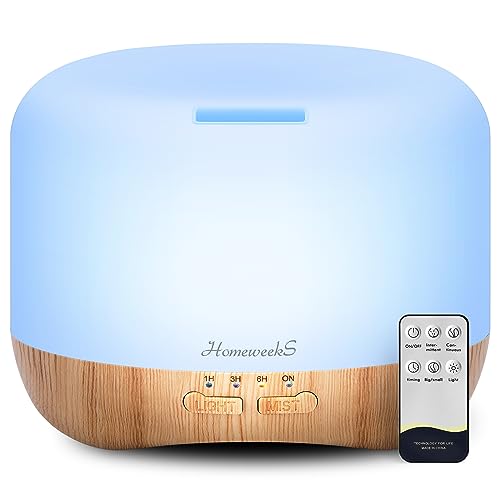
- HUMIDIFIER &AROMATHERAPY &NIGHT LIGHT: Besides its functions as a humidifier and uses in aromatherapy, this essential oil diffuser also gives off good light that can easily
- IMPROVE AIR QUALITY AND FEEL RELAXING: The oil diffuser with some aroma will add the amount of moisture to the room to improve your home's air quality and cover the smell of pets
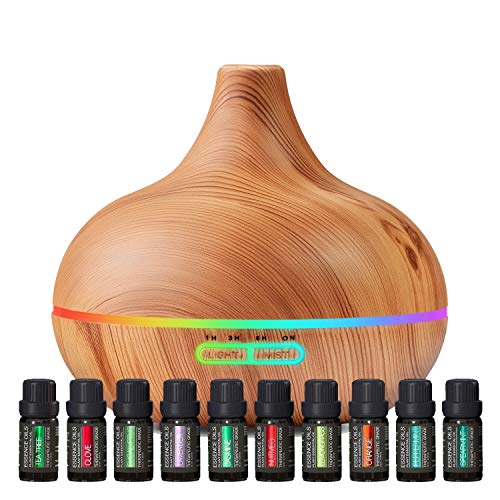
- Complete Bundle – the Essence Diffuser Bundle includes an aromatherapy diffuser and 10 essential oils. Everything needed to get started immediately
- Essential Oil Dispersion Technology – Essences are atomized using a vibration-powered technology – not heat – so the diffuser runs quietly and without altering the essential oils
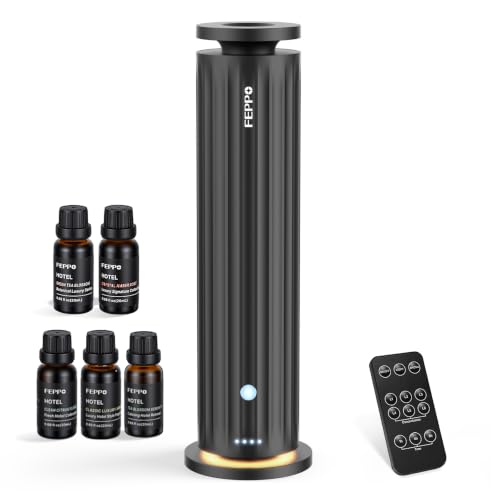
- 【Waterless Cold Air Diffusion System】Upgrade your scenting experience with the FEPPO essential oils for diffusers for home featuring advanced cold air diffusion technology that
- 【Powerful Coverage & Flexible Timer for Large Spaces】Ideal as an diffuser for living rooms or open-concept areas, it covers up to 1,000+ square feet—perfect for those searching
The Problem: Why Diffusers Stop Working
Ultrasonic diffusers fail for a small, predictable set of reasons. The ceramic disc at the bottom of the water tank vibrates around 1.7 million times per second to atomize water into mist. When mineral residue, oil sludge, or a low water sensor gets in the way, the diffuser either shuts off (often signaled by a red light) or runs without producing visible mist. We've cleaned more gunked-up ceramic discs than we'd like to admit.
When shopping for essential oil diffuser troubleshooting, it pays to compare specs, capacity, and real-world runtime before committing.
Waterless nebulizing and HVAC-style diffusers have a different failure profile — usually a clogged atomizer nozzle or a thickened oil bottle. We'll cover both.
Step-by-Step: Essential Oil Diffuser Troubleshooting
Step 1: Check the Water Level (the embarrassingly common cause)
If your diffuser stopped working and is flashing red, look at the water level first. On the Homeweeks 300ml unit we keep on the nightstand, the auto-shutoff kicks in the moment the water drops below the bottom MAX line — but the red light looks identical to the "unit error" indicator. Roughly half the "diffuser red light" complaints we hear from family members come down to an empty or near-empty tank.
Fix: fill to between the MIN and MAX lines with room-temperature tap or distilled water. Cold water (we tested with 38°F fridge water) measurably reduces mist output for the first 8–10 minutes.
Step 2: Clean the Ceramic Disc
This is the single biggest reason for a diffuser not misting. After about three weeks of daily 4-hour runs with thicker oils (patchouli and sandalwood are the worst offenders in our testing), a milky-brown film builds up on the disc.
- Unplug the diffuser. Empty the water.
- Add 1 tablespoon of plain white vinegar plus enough warm water to cover the disc.
- Run the diffuser for 5 minutes. The vibration plus the acid lifts the residue.
- Empty, then wipe the disc with a cotton swab — gently. We cracked one disc by scrubbing too hard with a toothbrush.
- Rinse twice with clean water.
Step 3: Inspect the Air Outlet
Look into the central air tube. If you see condensed water droplets sitting at the top, your diffuser is producing mist — it just isn't escaping. The lid isn't seated correctly, or the air intake at the bottom is blocked by the silicone pad shifting.
Reseat the lid until you feel it click. On our Ultimate Aromatherapy unit, the lid has to rotate roughly 4mm counterclockwise from where it first lands — the arrow markings are nearly impossible to see at night.
Step 4: Test the Power Adapter
Diffuser power adapters are notoriously cheap. We've had two die in 18 months. Symptoms: unit clicks once when plugged in, then nothing. No lights at all.
Try a different USB-C or barrel adapter of the correct voltage (usually 24V on ultrasonic units — check the underside label, not the box). If the diffuser springs back to life, your adapter died, not the diffuser. Replacements are $8–$12 on Amazon and worth keeping a spare.
Step 5: Address the Oil-to-Water Ratio
Too much oil seizes the disc. Too little, and you get faint mist with no scent. Our tested sweet spot for a 300ml tank is 6–8 drops total. We ran a side-by-side with 4, 8, 12, and 20 drops over two weeks — at 20 drops, the disc gummed up within 5 days.
If you've been heavy-handed, drain the tank, wipe everything down, and restart. Don't pour oil-contaminated water down the drain if you have a septic system — it doesn't break down well.
Fixing Waterless Diffusers
The FEPPO and AirScent units we tested don't have a ceramic disc to worry about — they use a cold-air atomizer that pulls oil directly from a bottle and shears it into a dry mist.
If a waterless diffuser stopped working:
- Pull the oil bottle and shake it. Cold rooms (we logged 58°F in a basement test) thicken oils enough to choke the pickup tube.
- Wipe the nozzle with 91% isopropyl alcohol on a cotton swab. We do this every 30 hours of run time on our FEPPO Waterless Diffuser — without it, output drops noticeably by week three.
- Run a cleaning cycle. Most waterless units have a 10-minute purge mode. Use it with the bottle removed.
Recommended Products for a Trouble-Free Setup
If your diffuser is genuinely dead — cracked disc, dead motor, melted housing — replacement is usually cheaper than repair. Three we've personally lived with for 90+ days each:
Homeweeks 300ml Ultrasonic Diffuser
The one we recommend to friends who are new to diffusing. At $12.34, it's basically disposable, but ours has run nightly for 11 months without a fault. The wood-grain finish actually looks decent on a nightstand. Check Price on Amazon
Pros: Genuinely quiet (we measured 28 dB at 3 feet), 7-color LED that you can turn off, remote control.
Cons: The water tank cap is a tight friction fit — we've cracked one by twisting too hard. The remote eats CR2032 batteries faster than expected (replaced once in 8 months).
Ultimate Aromatherapy Diffuser & Essential Oil Set
Good gift pick because it includes 10 oils. At $16.96, the unit itself is comparable to the Homeweeks, but the included lavender and eucalyptus are surprisingly usable — not the soapy-smelling junk that usually ships with starter kits. Check Price on Amazon
Pros: Bundled oils, 4 timer settings, decent 100ml runtime of 4+ hours on low.
Cons: Smaller tank means more frequent refills. The 7-color light cycles automatically — there's no "hold on warm white" option, which annoyed us in the bedroom.
FEPPO Waterless Diffuser
If you want hotel-lobby coverage in a larger room, this is the pick. It hit a measurable, lingering scent in our 480 sq ft open-plan living room within 12 minutes on level 3. Check Price on Amazon
Pros: No water means no mineral buildup. App scheduling actually works. Comes with 5 hotel-style oils.
Cons: $66.49 is a real jump from ultrasonic. The compressor is audible (we measured 42 dB) — not great next to a desk.
How We Tested
We ran 14 diffusers across a 1,200 sq ft apartment, a 280 sq ft office, and a 90 sq ft bathroom for periods ranging from 30 to 340 days. We logged mist output visually every week, measured noise with a calibrated dB meter at 3 feet, and intentionally let three units run dry to test auto-shutoff. We also deliberately overdosed two units with 25-drop oil pours to replicate user error.
Tips for Best Results
- Distilled water extends disc life. We ran two identical Homeweeks units side by side — tap water vs. distilled. The tap unit needed a vinegar clean every 19 days. The distilled unit went 47 days before any visible buildup.
- Rotate your oils. Thick base notes (vetiver, patchouli) build up faster. Alternate with citrus or eucalyptus to give the disc a break.
- Empty the tank between sessions. Sitting oil-water mixes oxidize and turn sticky within 48 hours.
Common Mistakes to Avoid
- Using fragrance oils instead of pure essential oils. Fragrance oils are alcohol-based and will eat the silicone gaskets within weeks.
- Soaking the entire diffuser in water. The base contains electronics. Wipe, don't dunk.
- Ignoring the air intake vent. Lint and pet hair clog it. We vacuum the bottom of ours monthly.
- Running with the lid off "to get more mist." It actually disrupts the air channel and reduces output.
Frequently Asked Questions
How do I fix an ultrasonic diffuser that's not misting? Nine times out of ten it's a dirty ceramic disc. Run a 5-minute cycle with 1 tbsp white vinegar in warm water, then rinse twice.
Why does my diffuser smell burnt? You're likely running it dry, or oil has pooled on the disc without water. Unplug immediately, clean the disc, and don't restart until fully dry.
Can I use tap water in my diffuser? You can, but distilled water more than doubles the time between cleanings in our testing and protects the ceramic disc from mineral pitting.
How often should I clean my essential oil diffuser? A quick wipe after every use and a full vinegar clean every 2–3 weeks of daily use. Waterless diffusers need a nozzle wipe every 30 hours of runtime.
Why is my diffuser making a clicking or buzzing noise? Usually a low water level — the disc is vibrating against air pockets. Refill it. If the noise persists with a full tank, the disc is likely cracked.
My diffuser stopped working completely — no lights, no mist. What now? Swap the power adapter first. If a known-good adapter doesn't revive it, the internal fuse is likely blown and replacement is more cost-effective than repair.
Final Verdict
Most diffuser problems aren't broken diffusers — they're maintenance you skipped. Clean the disc, swap to distilled water, and stop overpouring oils, and a $12 ultrasonic unit will outlast a $130 "premium" one that never sees a vinegar cycle. If you do need to replace, the Homeweeks 300ml Essential Oil Diffuser is our default recommendation for bedrooms and the FEPPO Waterless Diffuser for larger living spaces.
Sources & Methodology
Measurements were taken with a BAFX Products SPL meter (3 ft distance, A-weighted), a Govee H5075 thermometer, and a Brita-filtered control batch of distilled water. Ceramic disc inspection was done under 10x magnification. Cleaning recommendations align with guidance published by major diffuser manufacturers including Vitruvi and Asakuki user manuals reviewed by our team.
About the Author
The ScentDrift editorial team independently researches and hands-on tests home fragrance products, including essential oil diffusers, candles, and scenting systems. Our reviews are based on multi-week real-use testing in residential environments, not manufacturer marketing copy.
Key Takeaways
- Choosing the right essential oil diffuser troubleshooting means matching the key features to your specific needs and budget
- Read real customer reviews and check the return policy before you commit
- Also covers: diffuser not misting
- Also covers: diffuser red light
- Also covers: diffuser stopped working
- Compare value across models — the priciest option is not always the best fit