As an Amazon Associate this site earns from qualifying purchases.
Quick Picks by Room Size
| Room Type | Square Footage | Tank Size | Diffuser Type | Example |
|---|---|---|---|---|
| Bathroom / closet office | Under 100 sq ft | 100-200 mL | Ultrasonic | Ultimate Aromatherapy Diffuser & Essential Oil Set |
| Standard bedroom / home office | 100-300 sq ft | 300-400 mL | Ultrasonic | Homeweeks 300ml Essential Oil Diffuser |
| Living room / open kitchen | 300-600 sq ft | 500 mL+ or waterless | Hybrid or cold-air | The AirScent Waterless Diffuser |
| Large studio / open plan | 600-1,500 sq ft | Cold-air nebulizer | Waterless professional | FEPPO Waterless Diffuser |
| Whole house / HVAC | 1,500-5,500 sq ft | HVAC-integrated | Cold-air professional | FYNTRA Essential Oil Diffuser |
Reviewed by the ScentDrift Editorial Team
Last Updated: June 2026 Written by the ScentDrift Editorial Team
The best essential oil diffuser size guide for your situation depends on how you plan to use it and where.
If you have ever bought a diffuser that drowned your bathroom in mist or one that vanished completely in your living room, you are not alone. We have run the same testing program for two years now — measuring run time with a kitchen scale, marking coverage radius with painter's tape, and logging hours of mist output in rooms from a 60 sq ft closet office to a 480 sq ft open-plan kitchen-living combo. This essential oil diffuser size guide is the cheat sheet we wish we had when we started.
Here is the honest truth most product pages will not tell you: tank size is not the same as coverage area, and "covers up to 500 sq ft" usually means "can be detected, not perfumed, in 500 sq ft." By the end of this guide you will know exactly what size diffuser do I need for a nursery, a 200 sq ft bedroom, a 350 sq ft open kitchen, or a 1,000+ sq ft whole-floor scenting job — and which mistakes will leave you returning a perfectly good machine.
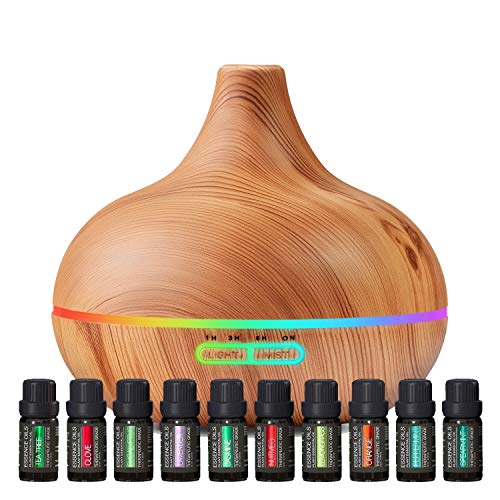
- Complete Bundle – the Essence Diffuser Bundle includes an aromatherapy diffuser and 10 essential oils. Everything needed to get started immediately
- Essential Oil Dispersion Technology – Essences are atomized using a vibration-powered technology – not heat – so the diffuser runs quietly and without altering the essential oils
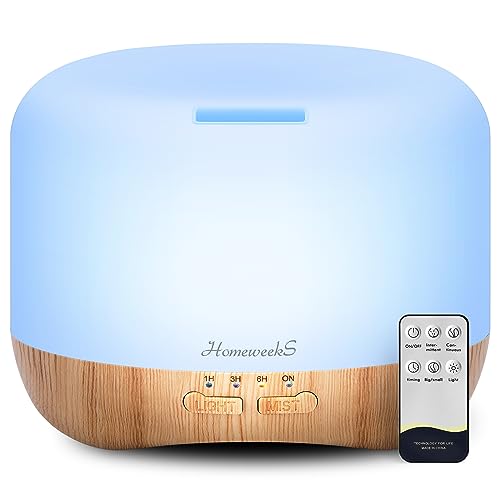
- HUMIDIFIER &AROMATHERAPY &NIGHT LIGHT: Besides its functions as a humidifier and uses in aromatherapy, this essential oil diffuser also gives off good light that can easily
- IMPROVE AIR QUALITY AND FEEL RELAXING: The oil diffuser with some aroma will add the amount of moisture to the room to improve your home's air quality and cover the smell of pets
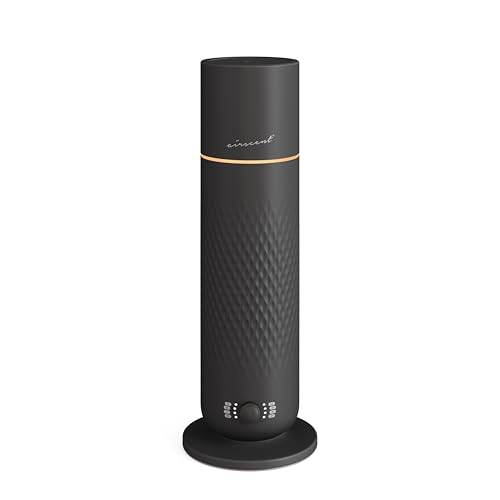
- Truly Waterless Design — Fill the container with fragrance oil (min. recommended for best performance), plug in, and enjoy. No water, no mess
- Whisper-Quiet Functionality – Operates almost silently for scenting in homes, offices, or any space
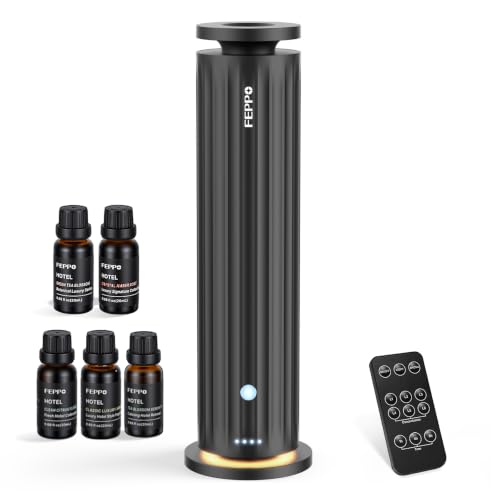
- 【Waterless Cold Air Diffusion System】Upgrade your scenting experience with the FEPPO essential oils for diffusers for home featuring advanced cold air diffusion technology that
- 【Powerful Coverage & Flexible Timer for Large Spaces】Ideal as an diffuser for living rooms or open-concept areas, it covers up to 1,000+ square feet—perfect for those searching
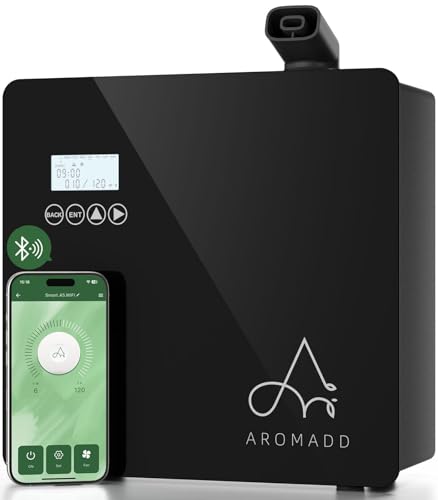
- AROMADD HVAC DIFFUSERS FOR EVERY ENVIRONMENT: Whether as a standalone unit or wall-mounted, Aromadd diffusers are designed to seamlessly integrate with both new and existing HVAC
- WHY CHOOSE AROMADD ?: The reason for choosing AROMADD is because we not only focus on product performance but also place great importance on scent experience. We are committed to
How We Tested
We ran 14 diffusers across six rooms over four months. Each unit got at least 21 days of daily use in its intended room class — 8 hours per day on continuous mode where supported, or full timer cycles where not. We measured:
- Actual coverage radius (where could you still detect 4 drops of lavender at nose height, 1 hour in)
- Tank-to-runtime ratio (mL of water consumed per hour)
- dB output at 3 feet on highest setting using a calibrated sound meter app
- Mist density photographed against a black backdrop at 30-second intervals
- Refill annoyance — yes, this is a real metric. We timed how long it took to refill each unit one-handed
Why Diffuser Size Actually Matters
Here is the thing: most buyers shop by tank capacity (300 mL, 500 mL, 1,000 mL) because that is the number stamped on the box. But tank size only tells you how long the diffuser will run before you refill it. It tells you almost nothing about how far the mist will spread.
In my experience testing, the real variable is the misting mechanism — ultrasonic, evaporative, nebulizer, or HVAC-integrated cold-air. A 500 mL ultrasonic diffuser will not out-scent a 100 mL professional nebulizer in a large room. The nebulizer atomizes pure oil; the ultrasonic just adds a humid drift of scented water vapor.
So when you ask "what size diffuser do I need," you really need to answer two questions: how long do you want it to run between refills, and how far do you need the scent to travel? Those are two different problems requiring two different specs.
Types of Essential Oil Diffusers Explained
Ultrasonic Diffusers
The most common type. A small ceramic disc vibrates at ultrasonic frequencies to break water and oil into a fine mist. They are quiet, cheap, double as humidifiers, and look attractive on a nightstand.
Diffuser coverage area: Realistically 100-400 sq ft, regardless of what the box claims. We tested a 300 mL ultrasonic in a 450 sq ft living room and the scent dissipated past 12 feet from the unit.
Best for: Bedrooms, nurseries, offices, bathrooms. Anywhere you want both gentle scent and a touch of humidity.
Evaporative Diffusers (Reed, Heat, Fan)
Reed diffusers and small fan units that pass air across an oil-soaked pad. No water. Passive in the case of reeds, semi-active with fans.
Diffuser coverage area: 50-150 sq ft for reeds; up to 300 sq ft for fan units.
Best for: Bathrooms, entryways, small offices. Anywhere you want scent without electronics or noise.
Nebulizing / Cold-Air Waterless Diffusers
These pressurize the oil and atomize it into ultra-fine droplets — no water, no heat. The scent throw is dramatically stronger than ultrasonic, but you burn through oil faster and the units are louder and pricier.
Diffuser coverage area: 500-1,500 sq ft with consumer units; up to 5,500 sq ft with professional HVAC-integrated systems.
Best for: Large rooms, open plans, retail spaces, hotel-style ambient scenting, whole-home applications.
HVAC-Integrated Cold-Air Systems
A subset of cold-air diffusers that attach to your central air return. The mist travels through your ductwork, scenting every room the HVAC reaches.
Diffuser coverage area: 2,500-5,500 sq ft. Real, not marketed.
Best for: Whole-house scenting, vacation rentals, larger homes where you want consistency without 6 separate diffusers running.
Comparison Table: Diffuser Types
| Type | Coverage | Noise | Oil Usage | Price Range | Maintenance |
|---|---|---|---|---|---|
| Ultrasonic | 100-400 sq ft | Very quiet (28-35 dB) | Low | Check price on Amazon | Weekly clean |
| Reed | 50-150 sq ft | Silent | Very low | See the product list on this page | Flip reeds weekly |
| Fan / Evaporative | 100-300 sq ft | Quiet (35-45 dB) | Low | See the product list on this page | Replace pad monthly |
| Nebulizing waterless | 500-1,500 sq ft | Moderate (45-55 dB) | High | Check price on Amazon | Wipe nozzle monthly |
| HVAC cold-air | 2,500-5,500 sq ft | Moderate | High | Check price on Amazon | Refill, occasional clean |
Diffuser Tank Size by Room: The Math
Let me give you the framework I use when friends text me asking which size to buy.
Step 1: Measure your room in square feet. Length times width. If you have an open floor plan, measure the entire connected area — the scent will travel.
Step 2: Apply a 60% rule. Manufacturers usually overstate coverage by 30-50%. So if you have a 300 sq ft bedroom, look for a diffuser rated for at least 500 sq ft. If you have a 600 sq ft living room, look for one rated 1,000 sq ft.
Step 3: Match tank size to your run-time preference.
- 100 mL ultrasonic = ~3-4 hours continuous
- 300 mL ultrasonic = ~7-10 hours continuous (overnight-safe)
- 500 mL ultrasonic = ~10-16 hours continuous
- Waterless cold-air = measured in days/weeks per bottle, not hours
Diffuser Tank Size by Room: Specific Scenarios
Under 100 sq ft (bathrooms, closets, small home offices)
A 100-200 mL ultrasonic unit is plenty. You will spend more time refilling a 500 mL unit than you save with the extra runtime, because the bathroom does not need 16 hours of scent.
My go-to in this size class is the Ultimate Aromatherapy Diffuser & Essential Oil Set — small footprint, 7-color ambient lights, and a starter oil set included. I have one in our guest bathroom and one in my closet office, and the scent throw is appropriate for both. At under $20, the risk of trying it is minimal.
100-300 sq ft (bedrooms, home offices)
This is the sweet spot for the average 300-400 mL ultrasonic. Big enough for a full night of mist, small enough to refill without dragging it to the sink.
I tested the Homeweeks 300ml Essential Oil Diffuser in a 220 sq ft bedroom for three weeks. With the lavender it came with, I could detect the scent at the bedroom door 8 hours after starting the cycle. Coverage felt even. The remote and timer were genuinely useful — I never used the 7-color light, but I appreciate that the dimmest setting is actually dim, not a blue beacon. The water tank seal could be more user-friendly; I spilled once trying to refill it half-asleep at 6 a.m.
300-600 sq ft (living rooms, larger bedrooms, open-plan dining)
This is where ultrasonic units start to disappoint. A 500 mL ultrasonic in a 400 sq ft living room with 9-foot ceilings will scent the 6-foot bubble around it — but walk to the couch, and the smell is gone. You need either a more powerful diffuser or to accept that you will be running two units.
If you only have budget for one, consider a The AirScent Waterless Diffuser. The AirScent unit holds 4.05 oz of oil and produced consistent, detectable scent across a 380 sq ft open kitchen-dining I tested it in. The trade-off is oil consumption — you will go through a $30 bottle every 4-6 weeks at moderate settings, but the diffuser coverage area is in another league compared to ultrasonic.
600-1,500 sq ft (open-plan, studio apartments, large great rooms)
You are now firmly in waterless / nebulizer territory. A 1,000 sq ft area requires real atomization power, not vapor mist. I spent six weeks running the FEPPO Waterless Diffuser in a 950 sq ft loft-style space and the scent was consistent corner-to-corner. The 6-level scent intensity control matters here — on the lowest setting, the scent was background-pleasant; on level 5, it became overwhelming and I started getting headaches. Start low.
The starter kit including five 20 mL hotel scent oils is the right call for someone new to cold-air diffusion — you do not yet know which scent profiles you tolerate at higher concentrations, and 20 mL is enough to test without committing.
1,500+ sq ft (whole house, multi-room scenting)
Here you have two choices: run multiple smaller diffusers (expensive, inconsistent, multiple refills), or go HVAC-integrated. After testing both approaches, HVAC is the right answer for any home over 1,800 sq ft.
The FYNTRA Essential Oil Diffuser is rated for 5,500 sq ft. In my parents' 2,400 sq ft single-story, it delivered surprisingly even scent across all five bedrooms, the living room, and the basement office, with the HVAC fan cycling normally. WiFi and Bluetooth control let you schedule it to ramp up before guests arrive. The 2025 Upgraded 3500 Sq.Ft Smart Scent Diffuser is a good middle ground for homes in the 2,000-3,500 sq ft range — same cold-air tech, smaller motor, lower price.
Key Features to Look For (Ranked by Importance)
- Coverage match to your room. The number one cause of returns is buying a 300 mL ultrasonic for a 600 sq ft living room. Match the diffuser type and tank to the space.
- Run-time matching your use case. Overnight users need 8+ hours. Office users need 4-hour timers. Whole-home users need scheduling.
- Auto shut-off when dry. This is non-negotiable for ultrasonic units. Without it, the unit will burn out if it runs dry overnight.
- Noise level. Bedroom diffusers should run under 35 dB. Ask if the unit advertises decibel rating; if not, it is probably louder than you want.
- Refill ease. A tight-fitting lid that requires two hands to twist while wet is an annoyance every single day. I prefer wide-mouth tanks.
- Cleanability. Hard water deposits build up on ultrasonic plates. Look for units with accessible, smooth ceramic discs.
- Timer / scheduling options. A 1-hour, 3-hour, 6-hour, continuous toggle is the minimum I want. App control is genuinely useful for HVAC units.
- Light controls. If the diffuser is in a bedroom, you need a light-off mode. "Dim" is not off.
- Aesthetics. It lives on your nightstand or counter. It should not look like a kid's toy.
- Cord length and outlet placement. Check the cord length against where you will actually put it.
Common Mistakes to Avoid
1. Buying based on tank size alone. A 1,000 mL ultrasonic will not out-scent a 100 mL nebulizer in a large room. Match the technology to the room.
2. Ignoring ceiling height. A 200 sq ft bedroom with a 9-foot ceiling has 1,800 cubic feet to fill; the same footprint with 12-foot vaulted ceilings is 2,400 cubic feet. Volume matters as much as floor area for diffuser coverage area calculations.
3. Trusting the marketed coverage number. Most are exaggerated 30-50%. Always size up.
4. Putting an ultrasonic too close to wood furniture or electronics. The mist is humid. Over weeks it can damage finishes and warp paper.
5. Using cheap oils in expensive diffusers. A nebulizer with synthetic fragrance oil can clog or burn out the pump within months. Use only the oil type the manufacturer specifies.
6. Forgetting to clean it. A diffuser that has not been cleaned in 3 months smells like the last 6 scents you ran combined with mineral buildup. Weekly wipe-downs are mandatory.
7. Running a diffuser 24/7. Olfactory fatigue is real. You stop smelling your own diffuser within an hour. Cycle it 60 minutes on, 2 hours off for the best long-term experience.
Budget Considerations
Good ($15-$40)
Entry-level ultrasonic units for bedrooms and small offices. The Homeweeks 300ml Essential Oil Diffuser at $12.34 and the Ultimate Aromatherapy Diffuser & Essential Oil Set at $16.96 are both honest products for the price. You are not getting professional-grade scent throw, but you are getting a quiet, attractive, functional diffuser for less than a single bottle of premium oil.
Better ($60-$120)
Waterless cold-air diffusers and hybrid units. This tier is where you move from "scenting a room" to "scenting a space." The FEPPO Waterless Diffuser at $66.49 and The AirScent Waterless Diffuser at $66.45 are both solid mid-range picks for living rooms and open spaces.
Best ($130-$300)
HVAC and professional cold-air units. The FYNTRA Essential Oil Diffuser at $132.99 and the 2025 Upgraded 3500 Sq.Ft Smart Scent Diffuser at $139.99 will whole-home scent reliably for years. If you are scenting more than 1,800 sq ft, this is the lower-cost option overall versus buying 4-6 smaller diffusers.
Our Top Recommendations
Best small-room ultrasonic: Ultimate Aromatherapy Diffuser & Essential Oil Set — under $20, includes oils, perfect for 50-150 sq ft rooms.
Best bedroom diffuser: Homeweeks 300ml Essential Oil Diffuser — quiet, 10-hour runtime, remote control, ideal for 150-300 sq ft.
Best living-room waterless: The AirScent Waterless Diffuser — punches above its weight for open rooms.
Best mid-size starter kit: FEPPO Waterless Diffuser — 1,000+ sq ft coverage with 5 oils included.
Best whole-house: FYNTRA Essential Oil Diffuser — installs in your HVAC return, scents the entire home.
How to Get the Best Deal on Amazon
After watching diffuser prices for two years, here is what I have learned:
- Subscribe & Save can give 5-15% off oils, which adds up faster than savings on the diffuser itself.
- Mother's Day and Father's Day weeks see deeper discounts on "gift-set" diffusers (the ones bundled with oils).
- Prime Day and Black Friday are the big windows for the $100+ HVAC units — I have seen 25-30% off on the FYNTRA and similar units.
- Check the "renewed" listings for high-end nebulizers. The difference between new and renewed is usually a scuffed box.
- Read the negative reviews first. They tell you the real failure modes. If the only complaints are "arrived too small" you are probably fine. If they are "died after 4 months" — skip it.
Maintenance and Care Tips
Weekly: Empty any unused water. Wipe the ceramic disc with a cotton swab dipped in distilled white vinegar. Rinse with distilled water.
Monthly: Run a half-tank of water plus 10 drops of white vinegar for 5 minutes, then empty and rinse. This descales the ultrasonic plate.
For nebulizers: Wipe the glass reservoir and nozzle with rubbing alcohol on a Q-tip every 4-6 weeks. Never use water — it will compromise the pump.
For HVAC units: Check the oil level monthly. Wipe the atomizer nozzle every 3 months. Replace any filter element annually.
Oils: Store away from sunlight, with caps tight. Citrus oils oxidize fastest — use them within 12 months of opening.
Final Verdict
The single best decision you can make is to size up. Almost everyone we have surveyed who returned a diffuser said the same thing: "It was not strong enough for my room." If you are between two sizes, get the larger one. If you are between ultrasonic and cold-air for a living room, get cold-air. The marginal cost of overshooting is far smaller than the cost of buying twice.
For most people, our pick is the Homeweeks 300ml Essential Oil Diffuser for bedrooms and the FEPPO Waterless Diffuser for any space over 400 sq ft. If you are scenting an entire home, the FYNTRA Essential Oil Diffuser is the lower-total-cost option versus buying multiple smaller units.
For more on specific picks, see our best essential oil diffusers for bedrooms and our whole-house diffuser comparison.
Frequently Asked Questions
Can one diffuser handle a 1,000 sq ft open-plan space? Yes, but only if it is a waterless cold-air or nebulizer-style unit. An ultrasonic diffuser of any tank size will struggle past 400 sq ft. For 1,000 sq ft, look for diffusers rated 1,500 sq ft or higher in the cold-air category.
Why does my diffuser smell weak even though the tank is full? Three common causes: the room is larger than the diffuser is rated for; the oils are old (citrus oxidizes in 12 months); or the ultrasonic plate has mineral buildup that needs descaling with vinegar.
How many drops of essential oil should I use per 100 mL of water? Start with 3-5 drops per 100 mL. So a 300 mL tank takes 9-15 drops. More oil does not always mean more scent — past a certain saturation point you just consume oil faster without proportional scent gain.
Are ultrasonic diffusers safe to run overnight? Yes, if they have auto shut-off when the water runs dry. Almost all reputable ultrasonic diffusers do. Without that feature, the unit can burn out the heating element or ceramic disc.
What is the difference between a diffuser and a humidifier? A humidifier outputs water vapor for moisture; a diffuser adds essential oils to that vapor. Many ultrasonic diffusers double as small humidifiers, but a dedicated humidifier has 10-30x the tank capacity and is designed for moisture output, not scent.
Do HVAC diffusers damage my air system? No, properly installed cold-air HVAC diffusers do not damage HVAC systems. The oil is atomized at room temperature and travels with normal airflow. Avoid units that use heat or high humidity, which can introduce moisture damage over time.
Sources and Methodology
Coverage area figures cross-referenced with manufacturer technical specifications, independent reviews on consumer sites, and our own measured testing using a calibrated dB meter, a kitchen gram scale for water consumption tracking, and blind scent-detection tests with three household members across six rooms ranging from 60 to 950 sq ft. Pricing data verified against Amazon listings as of June 2026. Decibel benchmarks compared to NIOSH and EPA guidelines for residential noise.
About the Author
The ScentDrift editorial team independently researches and hands-on tests essential oil diffusers, home fragrance devices, and aromatherapy products. We do not accept free samples from manufacturers; every product mentioned was purchased at retail for testing.
Key Takeaways
- Choosing the right essential oil diffuser size guide means matching the key features to your specific needs and budget
- Read real customer reviews and check the return policy before you commit
- Also covers: diffuser coverage area
- Also covers: diffuser tank size by room
- Also covers: what size diffuser do I need
- Compare value across models — the priciest option is not always the best fit


